This PDF worksheet introduces students to the concept of equivalent fractions‚ guiding them through visual comparisons and multiplication techniques. It offers clear examples‚ step‑by‑step practice‚ and instant feedback‚ ensuring mastery before moving to more complex problems. Students gain confidence.!!
1.1 Definition of Equivalent Fractions
Equivalent fractions are fractions that‚ even though their numerators and denominators differ‚ represent the same part of a whole. When simplified‚ they reduce to the same simplest form or decimal value. For example‚ 1/2‚ 2/4‚ 3/6‚ and 4/8 all simplify to 1/2 and equal 0.5 or 50%. The mathematical rule is that multiplying or dividing both the numerator and the denominator by the same non‑zero integer yields an equivalent fraction. This principle underlies fraction comparison‚ addition‚ subtraction‚ and multiplication‚ as it allows conversion to a common denominator. Visual tools—pie charts‚ fraction bars‚ number lines—illustrate how dividing a shape into equal parts and regrouping those parts preserves the proportion; Mastering equivalent fractions equips students to handle mixed numbers‚ improper fractions‚ ratios‚ and proportional reasoning in everyday contexts such as cooking‚ budgeting‚ and science measurements. Teachers often introduce equivalent fractions through hands‑on activities: cutting a pizza into slices‚ using fraction strips‚ or drawing number lines. These activities reinforce the idea that the size of each slice remains constant even when the number of slices changes. By practicing with worksheets that ask students to find equivalent fractions‚ identify common denominators‚ or convert fractions to decimals‚ learners develop a flexible understanding of fraction relationships. This flexibility is crucial for higher‑level math topics‚ including algebraic fractions‚ rational expressions‚ and solving proportion equations; In addition‚ equivalent fractions play a vital role in real‑world applications. When scaling recipes‚ adjusting measurements‚ or converting units‚ recognizing equivalent fractions ensures accurate calculations. Students can also use equivalent fractions to compare different recipes or adjust portion sizes accurately. This skill enhances confidence.
Using worksheets for equivalent fractions offers structured practice that reinforces conceptual understanding and procedural fluency. They provide a scaffolded progression: from identifying equivalent pairs to manipulating fractions with common denominators‚ and finally applying these skills to real‑world scenarios. Worksheets also enable immediate feedback; answer keys embedded in PDF files allow students to self‑check‚ fostering independent learning and self‑assessment. For teachers‚ worksheets serve as diagnostic tools: patterns of errors reveal misconceptions about multiplication of numerators and denominators‚ or the importance of simplifying before comparison. This data informs targeted reteaching. Moreover‚ printable PDF worksheets can be distributed digitally or printed‚ supporting both in‑class and at‑home learning. Interactive PDFs add an element of engagement—drag‑and‑drop‚ fill‑in‑blanks or clickable solutions—enhancing motivation and reducing passive completion. Consistency in practice also builds confidence; repeated exposure to varied fraction forms (mixed numbers‚ improper fractions‚ decimals) ensures mastery. Finally‚ worksheets align with curriculum standards‚ offering a ready‑made resource that can be customized to match pacing and learning objectives. In sum‚ equivalent‑fraction worksheets are essential for developing a robust‚ transferable skill set that underpins later algebraic concepts and everyday mathematical reasoning.
Students use these worksheets to convert fractions to decimals and percentages‚ linking representations and preparing for problem solving.!!
PDF Worksheet Formats
PDF worksheets come in three main styles: printable‚ interactive‚ and answer‑key versions. Printable PDFs are simple‚ printable sheets. Interactive PDFs let students click and fill directly. Answer‑key PDFs provide instant solutions for self‑grading. These formats suit varied learning styles and device use.!

2.1 Printable PDF Worksheets
Printable PDF worksheets for equivalent fractions provide a straightforward‚ paper‑based approach that teachers and students can use offline or in a print‑ready format. These worksheets are typically formatted for A4 or letter size‚ ensuring that they fit standard printers without scaling issues. The layout often includes a header with the lesson title‚ a brief objective statement‚ and a series of numbered problems that gradually increase in difficulty. Each problem may present a fraction and ask the student to find one or more equivalent fractions by multiplying the numerator and denominator by the same integer‚ or by simplifying a given fraction to its simplest form. Visual aids such as fraction bars‚ number lines‚ or pie charts are frequently incorporated to help students visualize the equivalence relationship. Additionally‚ many printable PDFs include space for students to write their answers and a separate answer key page at the end of the document. This key allows for quick self‑checking or teacher grading. Teachers can customize these worksheets by adjusting the number of problems‚ the range of denominators‚ or by adding themed examples (e.g.‚ pizza slices‚ chocolate bars) to increase engagement. The advantage of printable PDFs lies in their accessibility: they can be downloaded‚ printed‚ and reused multiple times‚ making them ideal for classroom handouts‚ homework assignments‚ or review sessions. Because they do not require software beyond a standard PDF viewer‚ they are compatible with most devices‚ from desktop computers to tablets. In summary‚ printable PDF worksheets offer a flexible‚ low‑tech solution that supports diverse learning environments while reinforcing the foundational skills of identifying and creating equivalent fractions. When preparing these worksheets‚ educators often include a short introductory paragraph that explains the concept of equivalent fractions in simple terms‚ such as “Two fractions are equivalent if they represent the same part of a whole‚ even though the numbers may look different.” This context helps students approach the problems with a clear mental model. Furthermore‚ printable PDFs can be grouped into themed sets—for example‚ a “Fruit Slice” set where each problem uses fruit imagery‚ or a “Time Division” set that uses clock faces—to keep students motivated. The ability to print multiple copies also supports collaborative activities‚ where pairs of students compare their answers before checking the key. Finally‚ the durability of paper allows for repeated use; teachers can laminate worksheets for long‑term classroom use or store them in binders for quick access during review sessions. By combining visual aids‚ clear instructions‚ and an answer key‚ printable PDF worksheets become a powerful tool for mastering equivalent fractions across all grade levels. Teachers can also print the worksheets in color to enhance visual appeal‚ especially when using colored fraction bars or charts.
2.2 Interactive PDF Worksheets
Interactive PDF worksheets for equivalent fractions offer a dynamic learning experience that blends traditional print with digital engagement. These PDFs incorporate clickable fields‚ embedded calculators‚ and instant feedback mechanisms. Students can type answers directly into form fields‚ and the document can automatically check correctness using JavaScript. When a student selects an equivalent fraction from a drop‑down menu or drags a fraction bar into place‚ the worksheet highlights the correct choice and provides a brief explanation. This immediate reinforcement helps solidify the concept of equivalent fractions by allowing learners to see the relationship between different numerators and denominators in real time. Teachers can customize the difficulty level by adjusting the range of denominators‚ adding time limits‚ or embedding short video explanations that play when a student clicks a help icon. Because worksheets are PDF‚ they stay accessible on laptops and tablets. The built‑in answer key can be hidden until the student completes all questions‚ encouraging self‑assessment before reviewing the solution. Additionally‚ educators can track completion status and performance metrics if the PDFs are distributed through a learning management system that supports PDF analytics. This data can inform targeted reteaching or enrichment activities. In sum‚ PDF very worksheets elevate the study of equivalent fractions by combining visual cues‚ hands‑on practice‚ and real‑time feedback‚ making abstract concepts tangible and engaging for students of all ages.
2.3 PDF Worksheets with Answers Key

PDF worksheets that include an answer key are a practical tool for both teachers and students. The key is usually placed on a separate page or in a hidden section that can be revealed after the student has completed the tasks. This format encourages independent problem‑solving before checking results. The answer key is formatted with clear‚ concise explanations for each solution‚ often showing the step‑by‑step process of finding equivalent fractions. By comparing the student’s work with the key‚ learners can identify misconceptions and understand the reasoning behind each correct answer. Teachers can use the key to quickly grade large groups‚ saving time while maintaining accuracy. For students‚ the key serves as a self‑check‚ reinforcing learning through immediate feedback. Many printable PDFs also allow teachers to customize the key’s visibility‚ such as using a password or a simple “Show Answers” button that reveals the solutions. This flexibility supports differentiated instruction‚ letting advanced students test themselves while providing a safety net for those who need extra guidance. Additionally‚ the key can include common pitfalls and tips‚ such as reducing fractions or using cross‑multiplication to verify equivalence. Overall‚ PDF worksheets with answer keys combine the convenience of distribution with the pedagogical benefits of self‑assessment making them an essential resource for mastering equivalent fractions. Students can also print the answer key separately to use as a study guide‚ allowing them to review mistakes at home. Teachers can annotate the key with color‑coded feedback‚ highlighting correct steps and common errors. The PDF format ensures that the key remains intact across devices‚ preserving formatting and preventing accidental alterations. When used in a blended learning environment‚ the answer key can be shared via email or a learning management system‚ making it accessible to parents and guardians who wish to support their child’s practice. Finally‚ the inclusion of an answer key promotes academic honesty‚ as students are less likely to resort to copying when they have a reliable reference to verify their own work.

These PDF worksheets introduce students to equivalent fractions‚ guiding them through visual comparisons and multiplication techniques. They offer clear examples‚ step‑by‑step practice‚ and instant feedback‚ ensuring mastery before progressing to more complex problems; Students gain confidence and a solid foundation for future math challenges.
3.1 Beginner Worksheets
Beginner equivalent‑fraction worksheets focus on foundational skills. They introduce the idea that two fractions represent the same part of a whole when their numerators and denominators share a common factor. Students practice by multiplying or dividing both the numerator and the denominator by the same integer‚ often 2 or 3. Visual aids such as shaded pie charts or number lines help solidify the concept. These worksheets use simple language suitable for early learners. They avoid complex terminology‚ making the material approachable. The exercises emphasize repetition to build muscle memory. Learners match fractions to identical values using visual models. They also complete fill‑in‑the‑blank tasks that reinforce multiplication of numerators and denominators. Drag‑and‑drop activities provide interactive engagement. A clear answer key allows self‑assessment. The format encourages students to check their work independently. These worksheets are ideal for grades 2‑4. By the end‚ students confidently state that 1/2 equals 2/4‚ 3/6‚ and 4/8‚ and explain the reasoning behind each equivalence. Students can also use fraction bars to compare sizes visually. By aligning bars of equal length‚ they see that 1/2 and 2/4 occupy the same space. This hands‑on approach reinforces the abstract concept with tangible evidence.
- Use fraction bars to visualize equivalence.
- Apply cross‑multiplication to confirm equality.
- Draw number lines to locate fraction positions.
- Practice with real‑world examples like slices of pizza.
Practice consistentlywatch confidence grow.
3.2 Intermediate Worksheets
Intermediate worksheets expand on basic concepts‚ introducing fraction simplification and common denominators. Students practice converting fractions to equivalent forms with larger multipliers‚ such as 4‚ 5‚ or 6‚ and then compare them on a number line. These exercises emphasize the importance of finding the greatest common divisor (GCD) to reduce fractions to simplest form. Learners solve problems that require them to identify the least common multiple (LCM) of denominators before adding or subtracting fractions. Visual tools like fraction circles and modular grids help students see how pieces fit together. The worksheets include multi‑step problems that combine multiplication‚ division‚ and simplification. Students also engage in word problems where they must determine equivalent fractions that represent the same quantity in different contexts‚ such as recipes or measurements. A key feature is the inclusion of a “check your work” section where learners verify equivalence by cross‑multiplication or by converting to a common denominator. The answer key provides detailed explanations‚ guiding students through each step. These resources are ideal for grades 5‑6‚ preparing them for algebraic fraction operations.
- Use GCD to simplify fractions.
- Find LCM for addition/subtraction.
- Apply cross‑multiplication for verification.
- Practice with real‑world scenarios.
- Explore fraction bars for visual comparison.
- Integrate technology with interactive sliders.
Consistent practice builds confidence and readiness for advanced topics. By mastering these intermediate skills‚ students can confidently tackle complex fraction problems‚ setting a solid foundation for future mathematical challenges.
3.3 Advanced Worksheets
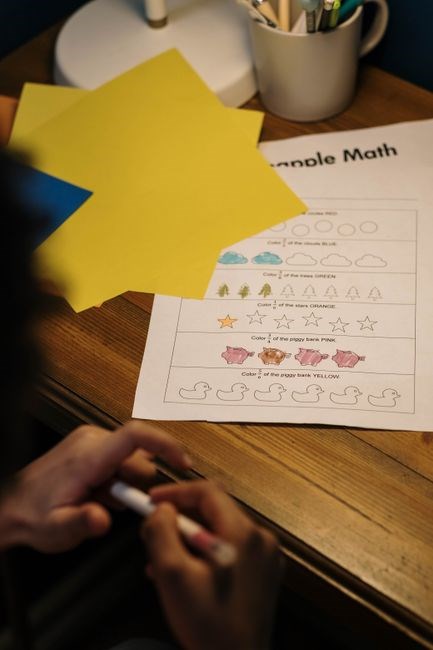
Advanced worksheets challenge students to master complex equivalent fraction concepts‚ including mixed numbers‚ improper fractions‚ fractional exponents. They must find common denominators using prime factorization‚ apply the least common multiple (LCM) to large denominators‚ and simplify results to lowest terms. Problems involve multi‑step operations: multiply‚ divide‚ add‚ and subtract fractions while maintaining equivalence. Students compare fractions with different numerators and denominators by converting to a common base or using cross‑multiplication to confirm equality. The worksheets feature applications such as scaling recipes‚ adjusting proportions in engineering calculations‚ converting units in scientific data. Each exercise includes a detailed solution path‚ encouraging students to justify each step mathematically. A key component is the “challenge box‚” where learners must prove that two seemingly unrelated fractions are equivalent by constructing a visual model or algebraic proof. These tasks promote critical thinking‚ reinforce the concept of equivalent fractions‚ and prepare learners for algebraic fraction manipulation in higher grades. The accompanying answer key offers step‑by‑step explanations‚ ensuring that students can self‑check and understand reasoning behind each solution. Students also practice converting between improper fractions and mixed numbers‚ ensuring they can express the same value in multiple forms. They solve problems that require finding equivalent fractions with denominators that are powers of two or ten‚ facilitating decimal conversion. The worksheets encourage the use of fraction trees to visualize relationships. Advanced tasks include proving equivalence by algebraic manipulation‚ such as simplifying expressions like (3/4) ÷ (9/12) showing that the result equals 1. The answer key provides not only final answer but also a step‑by‑step justification‚ highlighting common pitfalls and strategies for efficient computation.

Resources and Implementation
Explore free PDF resources‚ teacher‑approved templates‚ and interactive tools. Download from educational sites‚ embed in LMS‚ and print for hands‑on practice. Use the answer key for self‑assessment‚ and adapt worksheets to fit lesson plans or homework assignments.
Use shared worksheets for group work.!!
4.1 Free Download Sources
Finding free PDF worksheets on equivalent fractions is easy when you know the right sites. Below are trusted resources that offer printable sets‚ answer keys‚ and varying difficulty levels. These sites are ideal for teachers and parents who need ready‑to‑use materials without cost.
- Education.com – Printable worksheets for all grades with solutions.
- Teachers Pay Teachers (free section) – Community‑shared PDFs‚ filter by free.
- Khan Academy – Interactive practice and printable PDFs with step‑by‑step solutions.
- Common Core Sheets – Common Core aligned packs with answer keys.
- Math‑Drills.com – Thousands of free printable worksheets‚ instant download.
- SuperTeacherWorksheets.com – Free PDFs‚ some interactive‚ all with answer keys.
- Twinkl (free trial) – Trial period allows download of equivalent fraction PDFs.
- OpenStax – Free textbooks and supplemental worksheets in PDF.
- Google Drive shared folders – User‑generated collections‚ quick search yields many PDFs.
- NCTM – National standards‑aligned worksheets with answer keys.
Before distributing‚ verify PDF compatibility and review the answer key for accuracy. These free sources save time and resources while maintaining quality instruction.

Additional resources include local library digital collections‚ educational blogs‚ and community forums where teachers share custom worksheets. Many state education departments also provide free PDF sets aligned with curriculum standards. Always check the copyright status before sharing publicly.
Moreover‚ educators can create their own worksheets using free online tools that export to PDF‚ allowing customization for specific learning objectives. This flexibility ensures that every student receives practice tailored to their needs. Finally‚ always keep backups of downloaded files for future use. Enjoy the resources!!!
4.2 Classroom Integration Tips
Integrating equivalent‑fraction PDFs into daily lessons can boost engagement and reinforce concepts. Below are practical strategies that fit diverse classroom settings‚ from whole‑class instruction to individualized learning.
- Pre‑work assignment: Hand out a short PDF set before class to warm up. Students complete a few problems at home‚ allowing you to assess readiness and tailor the lesson.
- Collaborative stations: Set up stations with different difficulty levels. Each station contains a PDF worksheet‚ a set of manipulatives‚ and a digital timer. Students rotate‚ ensuring exposure to varied problem types.
- Peer‑review circles: After solving‚ students exchange worksheets and check each other’s answers using the provided key. This encourages critical thinking and accountability.
- Flipped‑class approach: Upload the worksheet to a learning platform (Google Classroom‚ Canvas). Students work through the PDF independently‚ then you use class time for discussion‚ error analysis‚ and extension activities.
- Assessment integration: Use the answer key to create a quick formative quiz. Students submit their PDF solutions‚ then you grade them electronically‚ saving time and providing instant feedback.
- Technology blend: Convert the PDF into an interactive format (e.g.‚ via Adobe Acrobat’s form fields). Students fill in answers digitally‚ and the system auto‑checks against the key.
- Cross‑curriculum links: Pair the worksheet with geometry lessons‚ or with data analysis in math. Students see how fractions appear in real‑world contexts.
- Reflection journal: After completing the PDF‚ students write a brief reflection on strategies that helped them solve the problems‚ fostering metacognition.
- Parent‑teacher communication: Send a copy of the worksheet to parents with a short guide on how to support practice at home.
- Continuous improvement: Collect student feedback on the PDF’s clarity and difficulty. Adjust future worksheets accordingly.
These strategies can be adapted for blended learning‚ ensuring every student engages with the material in meaningful way!!!
By weaving these techniques into your routine‚ the equivalent‑fraction PDF becomes a dynamic tool that supports mastery‚ collaboration‚ and lifelong learning.
Leave a Reply
You must be logged in to post a comment.